
PACKAGING & CRAFT/Transit packaging tests
ISTA 1A vs 2A: Which Packaging Test Actually Stops Your Products From Arriving Broken?
A simple, no-jargon guide to choosing between the two most common shipping box tests — so you can stop guessing and stop losing money on broken orders.
01Use 1A to screen for weaknesses under vibration and shock.
022A adds conditioning and compression, with vibration both before and after shock.
03Share the packaged weight, stacking conditions and channel requirements with the lab.
Start With a Story You Probably Know
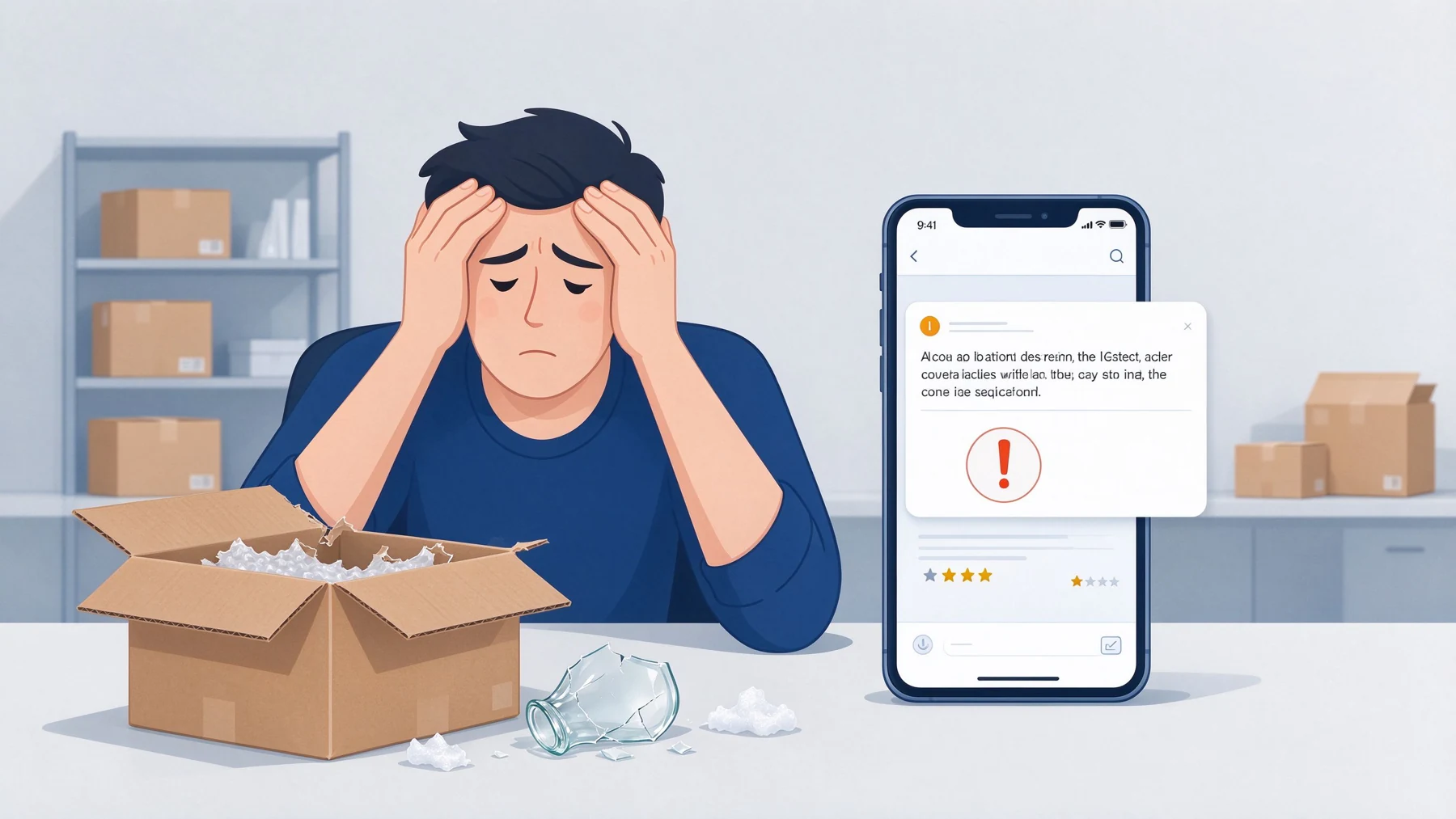
You launch a new product. The photos look great, the reviews are rolling in, and you ship your first 500 orders.
Then the emails start.
"The glass was shattered." "My candle arrived in pieces." "The screen has a crack." One bad review after another, and suddenly you're refunding orders and wondering what went wrong.
Sometimes the weak link is the shipping package. The box, cushioning and product work together. ISTA 1A and 2A can help you spot weaknesses before you ship 10,000 orders.
What Is ISTA, Anyway?
The International Safe Transit Association (ISTA) develops test procedures for transport packaging. A lab tests the product together with its shipping package. You can use the results to compare designs and decide what further testing your customer or distribution channel calls for.
For an individual packaged product weighing up to 150 lb (about 68 kg), 1A and 2A are two options worth comparing. The choice depends on the risks you need to investigate and any test your customer specifies.
- ISTA 1A — the basic, quick screening test.
- ISTA 2A — a partial-simulation test that adds controlled conditioning, compression and a second vibration stage after shock.
ISTA 1A: The Quick Health Check
1A is like going to the doctor for a quick checkup: blood pressure, weight, temperature. It's fast, it's cheap, and it catches obvious problems. But it doesn't look deep.
In a 1A test, the lab does three things, in order:
| Step | What they do | In plain English |
|---|---|---|
| 1 | Let the box sit at room temperature | Just get it used to the lab. No stress. |
| 2 | Fixed-displacement vibration | A controlled vibration screen can reveal looseness, rubbing and other weaknesses. |
| 3 | Shock testing, such as a drop test | For drops, the height depends on packaged weight. Alternative shock methods are available. |
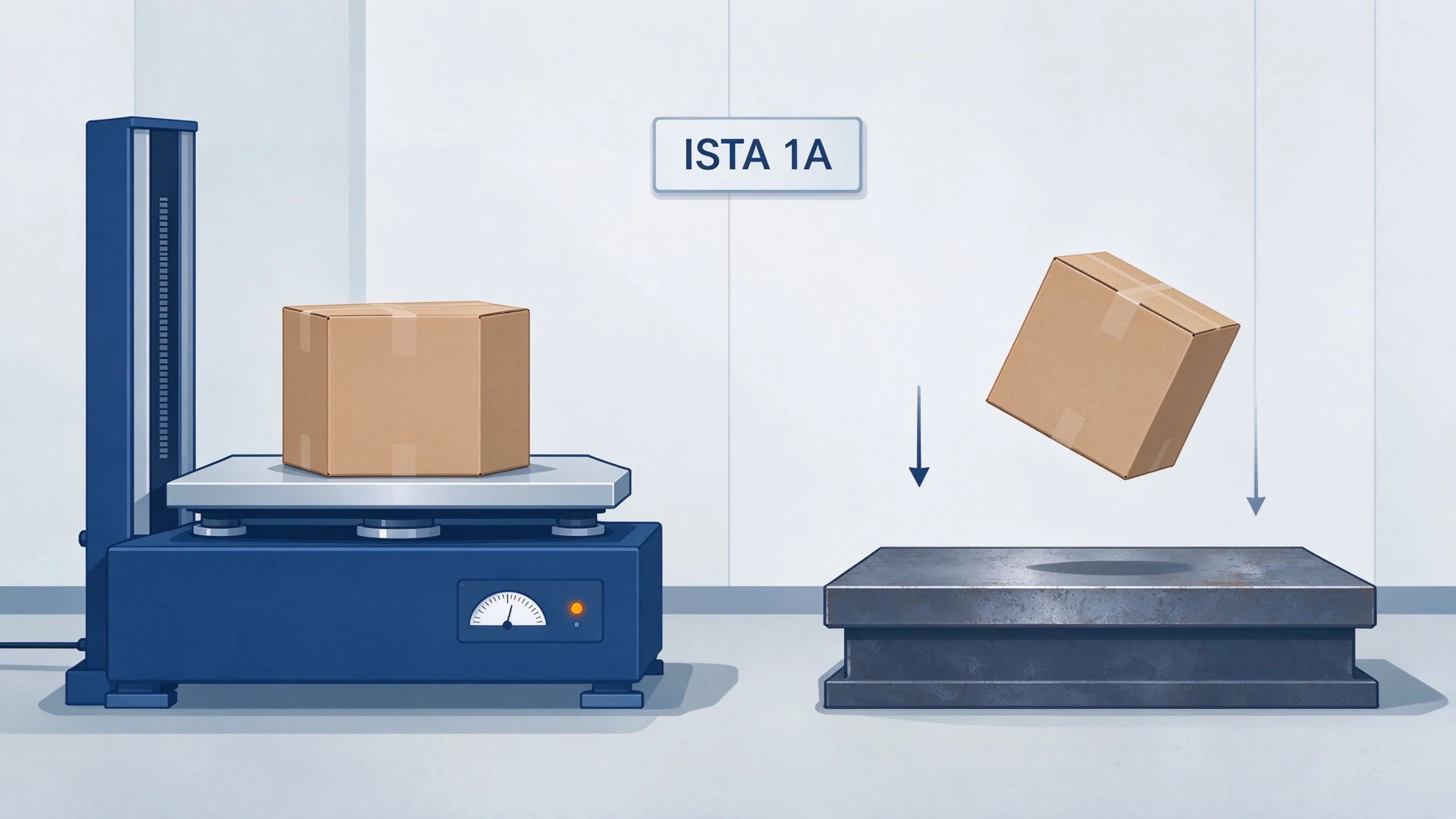
That's it. Three steps. No heat, no humidity, no piling heavy boxes on top of it.
Good for 1A
- Apparel, posters, books, phone cases — things that don't break easily.
- When you're still trying out different box designs and just want to know which one holds up better.
- An initial screening test before you invest in a more extensive transport test.
ISTA 2A: The Real-World Trial
2A has six stages. Along with controlled conditioning and compression, it puts the package back on the vibration table after the shock test. You get to see how it holds up after stresses accumulate.
| Step | What they do | Why it matters |
|---|---|---|
| 1 | Room temperature pre-conditioning | Same as 1A. |
| 2 | Controlled atmospheric conditioning | Condition the sample at the temperature and humidity selected for the project. |
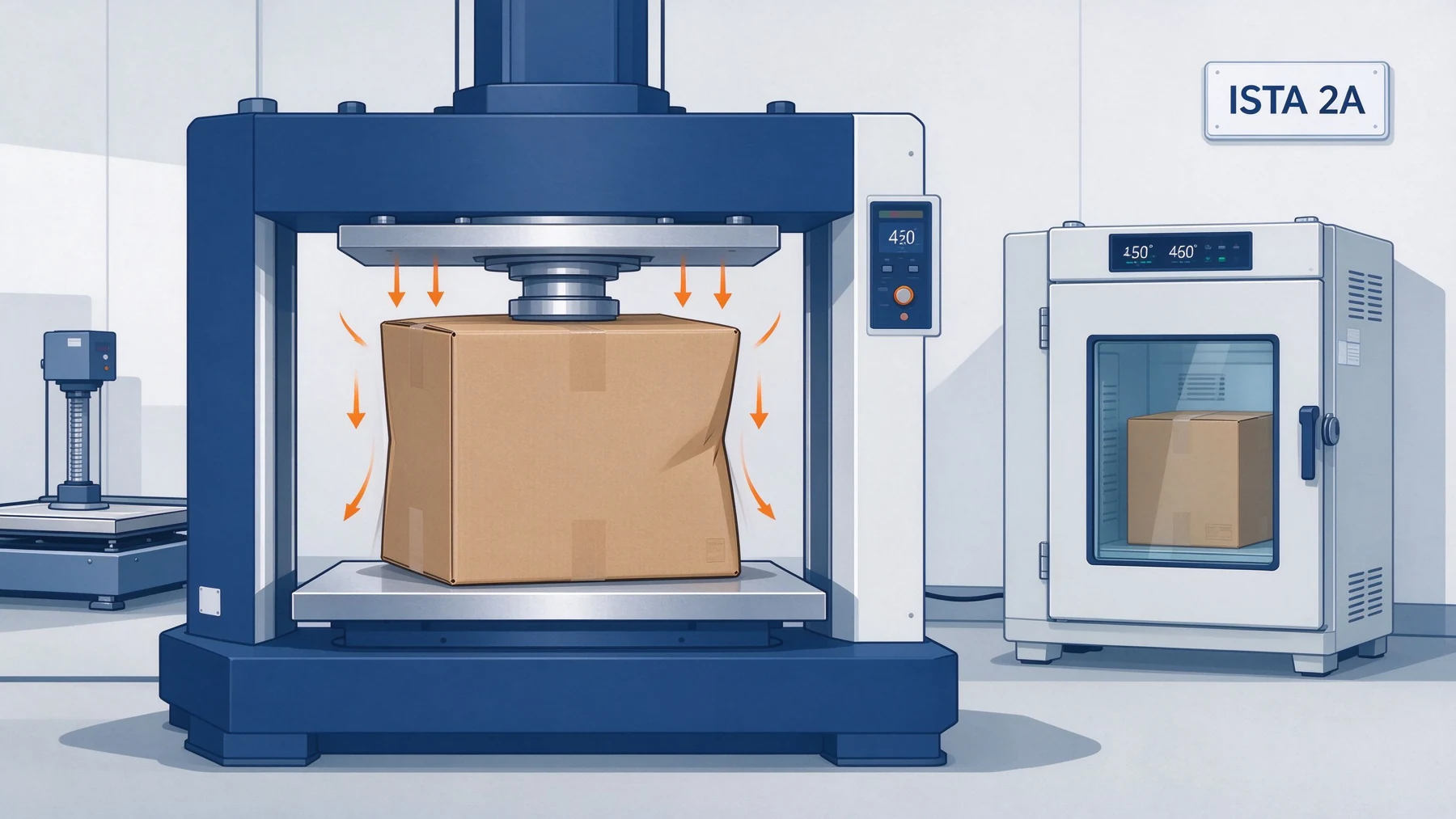
| 3 | Push down on top of the box | This is the compression test. It simulates a stack of boxes sitting on top of yours in a warehouse. |
| 4 | Shake it (fixed or random vibration) | Same idea as 1A, but 2A can use a more realistic, multi-frequency shake. |
| 5 | Shock testing, such as a drop test | Select the shock method and level for the procedure and packaged weight. |
| 6 | Vibrate again after shock | Check how the product and package withstand further vibration after the earlier stresses. |
The Compression Test Is the Big One
If you only remember one difference, remember this: 1A never piles anything on top of your box. 2A does.
Here's why that matters. Imagine your box sits in a warehouse for two weeks. Six other pallets get stacked on top of it. It's a humid summer. The cardboard softens. By the time a forklift picks it up, the box is bent, and the product inside is cracked.
A box can pass the vibration and shock stages in 1A while its stacking strength remains untested. That matters if the bottom carton has to carry the weight of a whole stack.
In 2A the lab conditions the package at the selected temperature and humidity, then applies a calculated load. Vibration, shock and a second vibration stage follow. At the end, inspect both the packaging and the product.
1A vs 2A at a Glance
| Comparison | ISTA 1A | ISTA 2A |
|---|---|---|
| Weight limit | Up to 150 lb (68 kg) | Up to 150 lb (68 kg) |
| Test stages | 3 stages | 6 stages |
| Vibration | One fixed-displacement stage | Two stages, before and after shock, using fixed displacement or random vibration |
| Shock testing | Yes, with a drop option | Yes, with a drop option |
| Controlled conditioning | Ambient preconditioning only | Yes, at the selected temperature and humidity |
| Stacking / compression test | No | Yes |
| How realistic? | Just a rough screen | Closer to real shipping |
| Illustrative US budget | $800–$1,500 | $2,000–$4,000 |
| Illustrative lead time | 1–2 weeks | 3–5 weeks |
| Best for | Durable goods and design screening | Packs exposed to stacking or environmental stresses |
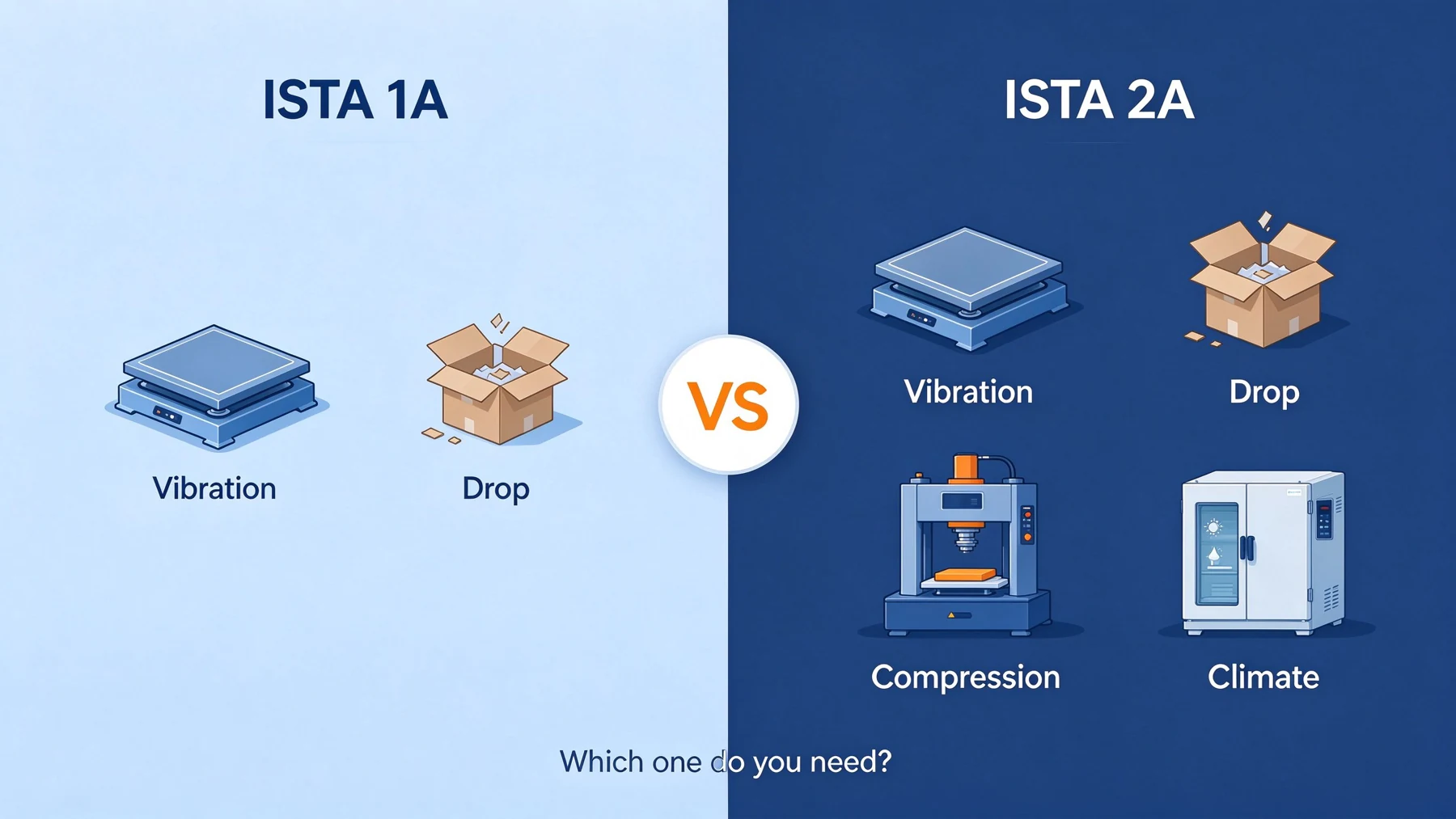
The US prices and lead times in the table are illustrative planning figures. Lab schedules, sample counts, conditioning and retesting affect both. Ask the lab for a written quote and delivery date.
So Which One Should You Pick?
Ask yourself three simple questions:
- Does your product break easily? For glass, ceramics, electronics or fragile cosmetics, discuss impact, cushioning and stacking risks with the lab. Then choose 2A or the procedure your channel specifies.
- Will cartons sit in a warehouse, container or fulfilment centre? Tell the lab how high they will be stacked, for how long and at what humidity. Those conditions help determine whether a compression test is needed.
- Is it light, durable and shipped straight from your shelf? For T-shirts, stickers and books, 1A can help you compare packaging designs. Reassess the shipping risks before scaling up.
A lot of smart sellers use both: they iterate cheaply with 1A while designing the box, then pay for one real 2A test right before production.
Common Questions
Is ISTA 1A enough for Amazon FBA?
Check the Amazon programme, product type and current packaging requirements. For example, Ships in Product Packaging (SIPP) has its own testing and certification rules. Check which requirements apply to your item before booking a lab.
What exactly is the compression test?
A common method places the packed carton between two platens and applies a calculated force or load. Procedure 2A also allows a specified static-load method. The lab checks how the packaging and product hold up.
Is 2A harder than 1A?
2A shows how the pack handles conditioning, stacking pressure and successive transport stresses. If the lab uses a drop test, it selects the height for the procedure and packaged weight. Other shock methods are also available under the procedures.
How long does it take?
As an example for planning, allow 1–2 weeks for 1A and 3–5 weeks for 2A. Ask the lab for the actual time from sample receipt to report, including scheduling and conditioning.
Bottom Line
For fragile goods or cartons that will be stacked or stored, assess compression and humidity risks early. Review the distribution environment and customer requirements with the lab to decide whether 2A fits.
For durable goods like T-shirts and stickers, start with 1A to screen designs. Revisit the test plan if volumes, shipping methods or packaging change.
This is a plain-language guide, not the official ISTA document. Always talk to an ISTA-certified lab before you book a test.
Further reading · ISTA 1A · ISTA 2A · Amazon SIPP
FROM IDEA TO UNBOXING
Discuss your shipping packaging
Tell us the product dimensions, packed weight and shipping method so we can discuss the carton and cushioning.
Discuss packaging requirements View related packaging products
Customisation process
How to order custom packaging: a complete 7-step guide
Read article ↗
Artwork submission
Custom packaging artwork: 8 prepress checks
Read article ↗
Carton selection
How to choose a folding carton for your product
Read article ↗
Sustainable design