
PACKAGING & CRAFT/Carton selection
How to choose a folding carton for your product
Compare paperboard and box structures in light of product weight, sales channels and brand positioning to find suitable packaging for beauty, food, electronics and gifts.
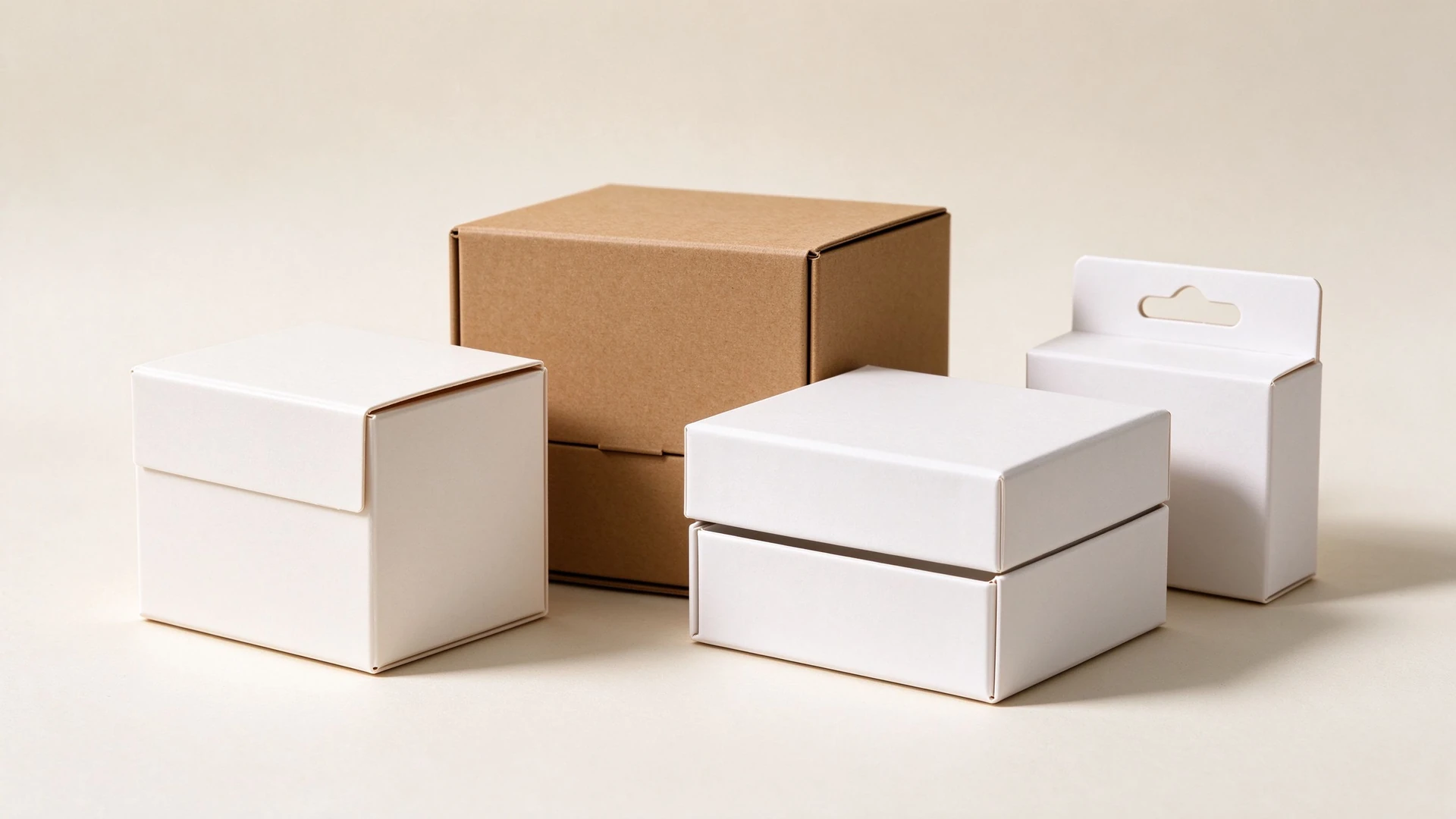
01Confirm product weight and intended use first
02Choose paper and bottom structure together
03Verify with packing and transport tests
A starting point:For beauty and retail packaging needing detailed printing, compare SBS and FBB. For heavier, fragile or liquid products, first evaluate reinforced bottoms and inserts. Brands seeking a natural appearance can compare kraft boards; budget secondary packaging can use options such as CCNB. Confirm the final solution with packing and transport tests.
Why the right carton depends on your product
A folding carton is often the first packaging a consumer touches and the final protection before a product reaches the shelf. Yet many brands choose a box by instinct, much like a font. The result can be overpackaging that erodes profit, or a carton unable to support a 200 g serum bottle and damaged during shipping.
There is no universally “best folding carton”. The right combination of material, board weight and box style depends on product weight, fragility, regulatory requirements and brand positioning. This article examines that combination by category.
Four key factors in choosing a carton
Before choosing materials and box styles, establish these four inputs to narrow your options.
2.1 Product weight and fragility
Products weighing less than 350–400 g per unit can often use a standard tuck-bottom box. For heavier products, or products containing glass, liquid, metal parts or sharp edges, first assess a reinforced bottom and insert, then choose board thickness based on box dimensions, assembly and load tests. Pre-glued auto-lock and snap-lock bottoms are different structures and must be confirmed separately.
2.2 Sales channel
- Retail shelf products: allow for stacking and hanging where needed, including hanger holes, and keep the barcode panel flat and scannable.
- E-commerce products: allow for parcel shipping; consider an auto-lock bottom, internal paper insert and somewhat heavier board.
- Subscription and unboxing-focused products: customers value the opening experience, so two-piece, magnetic and drawer boxes may justify a premium.
2.3 Regulatory and contact requirements
- Food and other products with special contact requirements: first confirm whether packaging contacts the contents directly, then check applicable documentation for the board, liner, inks and coatings. The board name alone does not establish suitability.
- Pharmaceuticals may also need tamper evidence, batch coding and reverse-tuck orientation suitable for high-speed cartoning lines.
2.4 Brand positioning and sustainability goals
Kraft paper on a premium serum can suggest a natural rather than luxury brand; SBS on mass-market cereal may suggest unnecessary expense. Match materials to the price point, and ensure recycled-content and certification claims such as FSC or GRS match what you can substantiate on the packaging.
Folding carton material quick reference
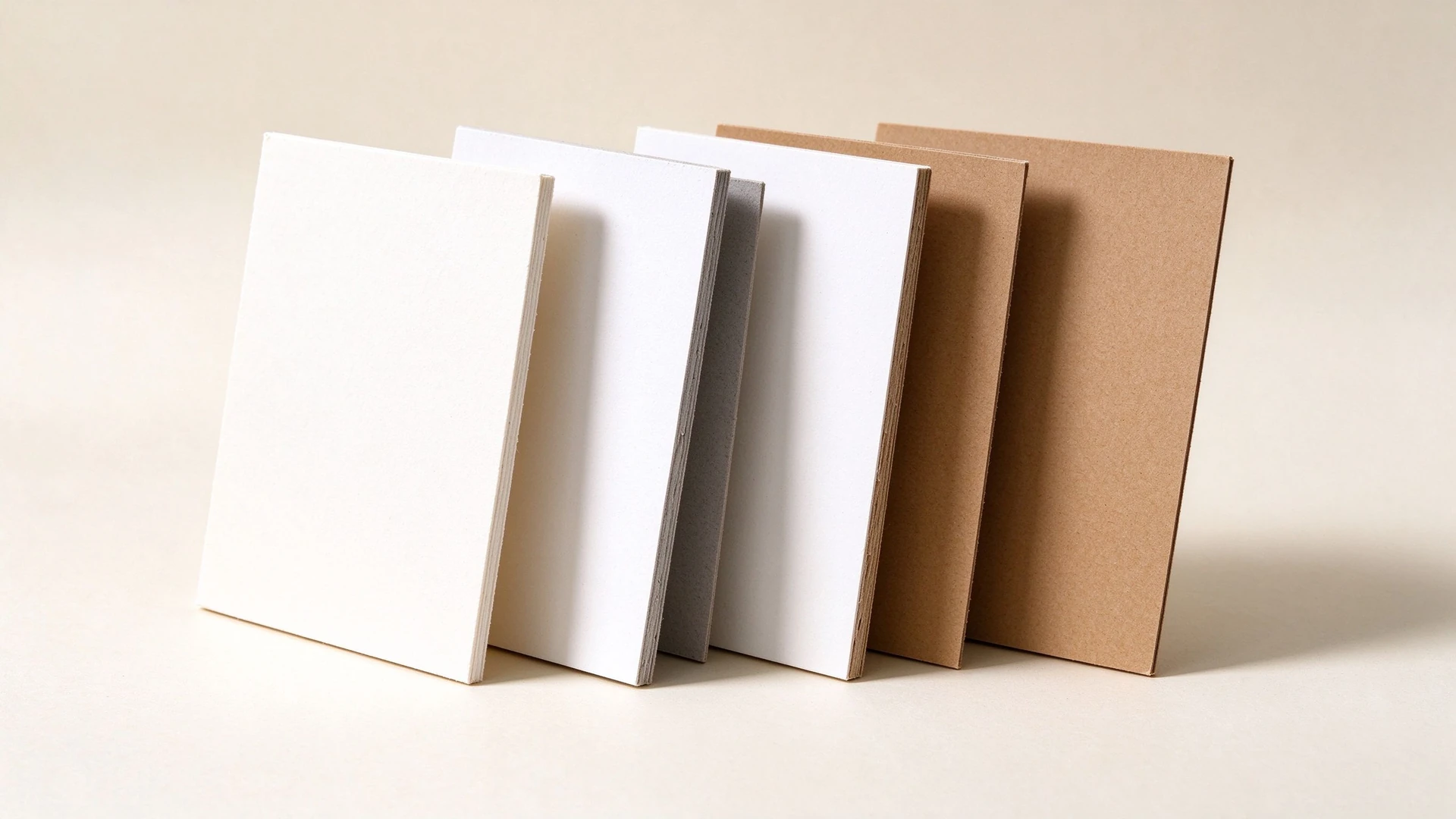
| Material | Surface characteristics | Stiffness | Print quality | Typical applications | Cost level |
|---|---|---|---|---|---|
| SBS: solid bleached sulphate board | White on both sides | Good | Excellent | Cosmetics, skincare, pharmaceuticals and premium food | Medium to high |
| FBB: folding box board | Typically a coated white face with a multi-layer fibre structure | Excellent stiffness at lower weights | Very good | European pharmaceuticals, cosmetics, chocolate and soap | Medium |
| CCNB: clay-coated news back board | White face and grey back | Moderate | Good | Value retail, toys and promotional packaging | Low |
| CUK: coated unbleached kraft board | White face and brown back | Tougher at the same weight | Moderate | Cereal, heavy consumer goods, eco brands and hardware | Medium |
| CKB: coated kraft back board | White face and kraft back | Good stiffness and strength; compare individual grades | Good | Heavy retail, dry foods and e-commerce | Low to medium |
| 100% recycled / kraft paper | Natural brown | Moderate | Limited | Eco and organic brands, secondary packaging | Low to medium |
In short:
- For vivid CMYK, foil, embossing or tactile film, start by comparing SBS and FBB.
- For a natural, organic or sustainable story, consider CUK or 100% recycled kraft.
- For tight budgets where printing is less important, consider CCNB or CKB.
Box structures: which style suits which product?
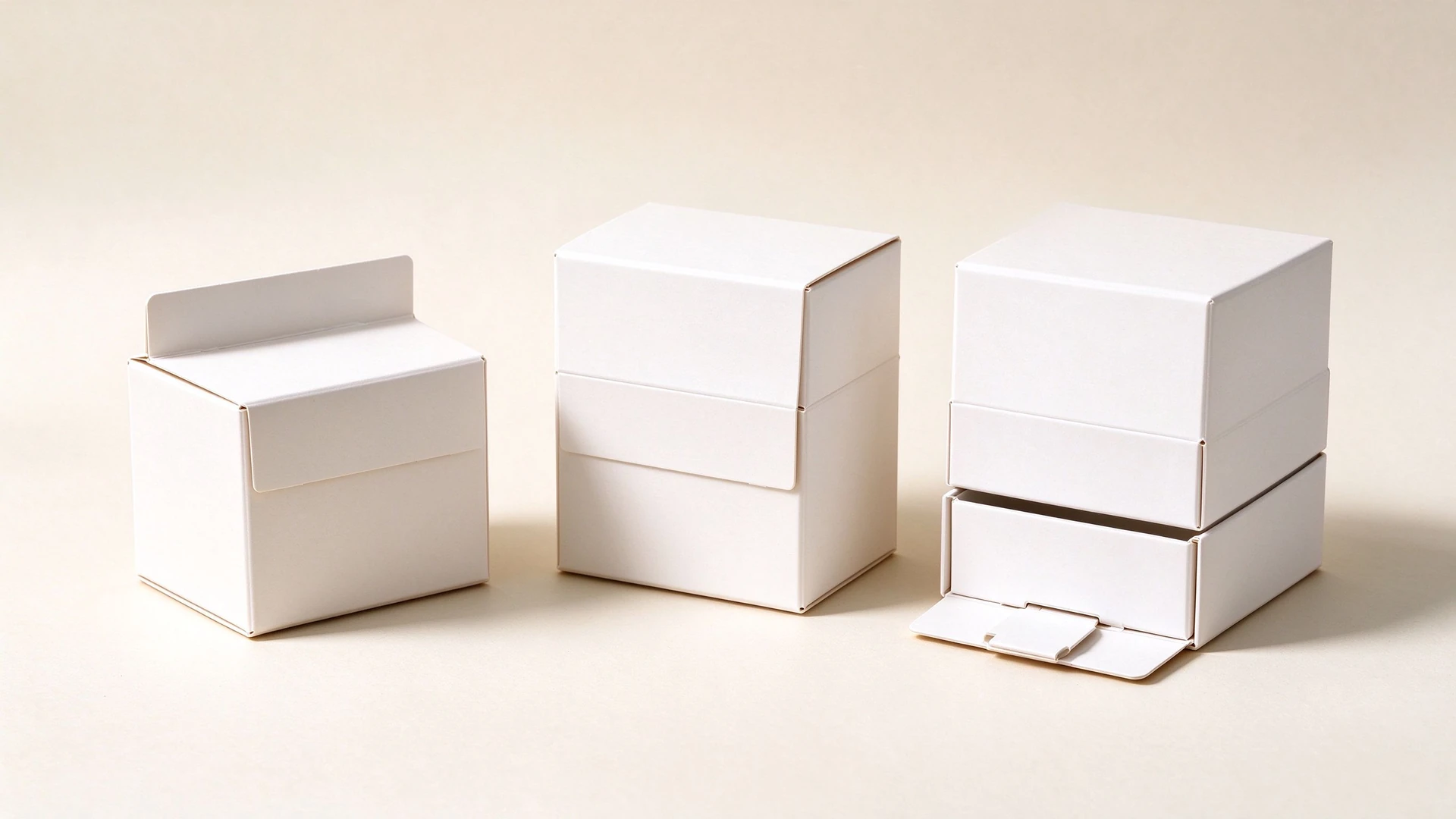
| Box style | Closure | Best suited to | Avoid for |
|---|---|---|---|
| Straight tuck end (STE) | Top and bottom tuck in the same direction | Cosmetics, skincare, gift boxes and premium retail | Heavy or liquid products |
| Reverse tuck end (RTE) | Top and bottom tuck in opposite directions | Pharmaceuticals, consumer goods, beauty accessories and high-speed filling lines | Products needing reinforced bottoms |
| Auto-lock / snap-lock bottom | Pre-glued auto-lock bottoms open into place; snap-lock bottoms lock through sequential folding | Glass, liquids, electronics and products over 400 g | Very lightweight general-purpose products where the cost is unnecessary |
| Two-piece / lid-and-base | Separate lid and base | Luxury goods, gift boxes and subscription unboxing | Low-unit-price SKUs |
| Drawer box | Sliding sleeve | Premium cosmetics, jewellery and sample sets | High-volume, low-unit-price products |
| Hanger box | Punched hanger hole at the top | Impulse retail, small accessories and toys | Heavy products where the hanger hole may tear |
A common mistake is using a tuck bottom where an auto-lock bottom is needed. A small additional cost per box can prevent a common shipping failure: the bottom opening in transit.
Selection guide by category
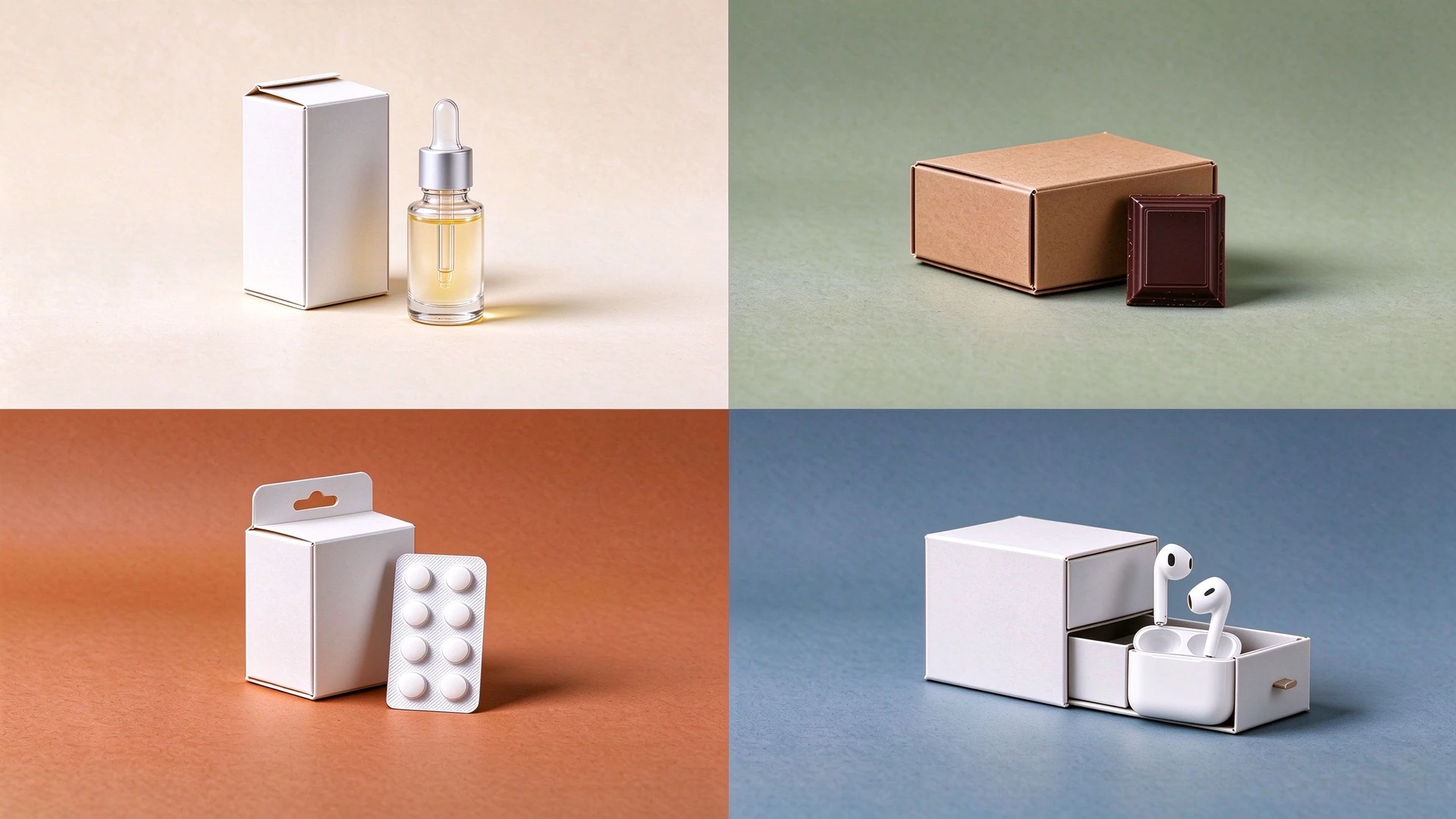
5.1 Cosmetics, skincare and beauty
In this category, the carton is part of the product experience.
- Material: use SBS at 18–24 pt for premium lines, FBB at 250–350 gsm for mid-market products, and consider CUK for natural-style brands.
- Box style: use straight tuck end (STE) for serums, lotions and individual skincare products; consider two-piece or drawer boxes for gift sets and premium launches.
- Finishes worth considering: tactile film, spot UV, foil and embossing can signal a premium position on the shelf and support a higher retail price.
- Watch for: assess reinforced bottoms and paper inserts for glass and pump bottles. Tuck bottoms opening in transit can lead to poor reviews.
5.2 Food and beverages
Food packaging is subject to regulatory as well as aesthetic requirements.
- Material: check whether SBS, FBB or other board is suitable for the actual contact scenario. Chocolate, tea, coffee and baked goods often use 20–24 pt SBS; pasta, cereal and snack boxes often use CUK or CKB for shelf stiffness.
- Box style: use RTE for high-speed filling lines; consider auto-lock bottoms for oily products, liquids and glass jars.
- Watch for: confirm that board liners and inks meet applicable food-contact requirements, including US FDA and relevant EU or UK frameworks. Evaluate recycled fibre against the contact scenario and target market; check liners and documentation, not just the board name.
5.3 Pharmaceuticals, supplements and medical devices
Pharmaceutical cartons are designed for filling lines as well as presentation.
- Material: FBB is common in Europe and SBS in North America, at 20–24 pt. A white inside surface supports a clean appearance and batch coding.
- Box style: reverse tuck end (RTE) is a common default, feeding reliably into high-speed horizontal cartoners and supporting tamper-evident seals.
- Required elements: batch number, expiry date, barcode, manual insertion opening and, where regulations require, child-resistant or tamper-evident features.
- Watch for: do not choose a decorative two-piece box if the filling line cannot handle it; many pharmaceutical lines accept standard RTE geometry.
5.4 Electronics and digital accessories
For electronics, the perceived quality depends partly on how well the product is protected.
- Material: SBS or CKB at 24 pt or thicker; cables, chargers and small accessories can be heavier than they appear.
- Box style: an auto-lock bottom is a common default. Use a pulp or corrugated insert to hold the product; movement inside the box can affect the customer's perception.
- Retail options: use hanger boxes for small items such as earphones or chargers, and windows when accessories need to be visible.
- Watch for: electrostatic-sensitive components may need ESD protection; tell the supplier before sampling.
5.5 Luxury, gifts and premium retail
For luxury products, the unboxing experience is part of the marketing.
- Material: SBS above 24 pt, often in a two-piece structure; thicker walls approach a rigid book-style box.
- Box style: lid-and-base, drawer or magnetic closure. Refined STE or RTE folding cartons may also suit the product and brand.
- Finishes: foil, embossing, debossing and tactile film. At this level, matte finishes often look more premium than gloss.
- Watch for: premium boxes can be slow to assemble by hand. For large orders, calculate assembly labour per box as well as material cost.
5.6 Eco, organic and natural brands
Environmental claims must withstand scrutiny.
- Material: CUK, with a white face and kraft back, combines printability with a natural look. For a fully kraft appearance, consider 100% post-consumer recycled kraft board with FSC and preferably GRS certification.
- Box style: STE or RTE. Keep printing restrained; one or two spot colours on kraft may feel more natural than four-colour printing.
- Watch for: compostable and recyclable claims are regulated in many markets. Ensure the board, lamination and ink system support any statement printed on the box.
5.7 Heavy consumer goods, household products and hardware
For products stacked on pallets for weeks, stiffness matters more than printing.
- Material: CKB or CUK. Strength depends on grade, fibre composition and structure; compare material data and samples.
- Box style: auto-lock bottom. Consider a hanger box only if the product is light enough that the hole will not tear.
- Watch for: thin board can bulge when carrying heavy products. Select board weight based on the load, not just a sample's appearance.
Weight-based assessment: a quick checklist
Units: pt measures thickness and gsm measures paper weight. These are starting points; confirm final structure and board specifications with packing, load and transport tests.
Use this as a starting point and refine it with your supplier.
| Product weight | Reference board thickness | Suggested bottom |
|---|---|---|
| Under 200 g | 16–18 pt | STE / RTE |
| 200–400 g | 18–20 pt | STE / RTE; consider an auto-lock bottom |
| 400–800 g | 20–24 pt | Auto-lock bottom |
| Over 800 g, or glass / liquid | Above 24 pt / double-wall corrugated option | Auto-lock bottom + insert |
These ranges are references, not rigid rules. Final thickness and weight depend on box volume, content distribution and stacking height in the supply chain.
Five common mistakes brands make
- Using a tuck bottom for a heavy product increases the risk of the bottom opening and damage in transit.
- Using SBS for price-sensitive consumer goods means paying for whiteness that may not be needed.
- Using recycled board for food without a food-grade liner: the board name alone does not establish food-contact suitability.
- Ignoring filling-line geometry: if an attractive two-piece box slows manual packing, labour costs can outweigh design savings.
- Printing environmental claims the carton cannot support: composite lamination, foil and plastic windows may undermine recyclability claims. Ask the supplier for a recyclability assessment before printing.
Frequently asked questions
What is the most common folding carton material?
SBS is a common premium carton board, known for its white surface and print quality. CUK and CKB are prominent in mid-market and heavy retail packaging.
What is the difference between straight tuck end (STE) and reverse tuck end (RTE)?
STE top and bottom tuck in the same direction; RTE top and bottom tuck in opposite directions. RTE has slightly higher production efficiency and is standard on pharmaceutical and high-speed consumer-goods lines.
When should I consider an auto-lock bottom?
For units over approximately 400 g, glass or liquid contents, or e-commerce parcel shipping, first evaluate an auto-lock or other reinforced structure and confirm it with inserts, load and transport tests.
Can folding cartons hold food?
Yes, but the board, liner, ink and coating must meet the contact requirements for the actual use and have appropriate documentation. SBS and FBB with suitable liners are common for chocolate, tea, coffee, baked goods and dry foods.
Are kraft boxes always more environmentally friendly?
Not necessarily. Kraft boxes with plastic lamination, foil or windows may not be recyclable. Assess fibre source, material combinations, coatings and local recycling conditions. FSC addresses responsible fibre sourcing and does not alone establish that the complete package is recyclable.
How important are board thickness and weight?
Pt measures board thickness (1 pt = 0.001 inch), while gsm measures weight; they are not directly interchangeable. A 16–24 pt thickness can be a reference for some boards, but stiffness also depends on construction. Thin board may bulge or collapse under heavy products, while thick board on small products can waste money. Match board weight to product weight and box volume.
FROM IDEA TO UNBOXING
Find the right carton for your product
Share your actual product dimensions, weight and sales channel so we can find a suitable combination of paper, box style and inserts.
Discuss packaging requirements View related packaging products
Transit packaging tests
ISTA 1A vs 2A: Which Packaging Test Actually Stops Your Products From Arriving Broken?
Read article ↗
Customisation process
How to order custom packaging: a complete 7-step guide
Read article ↗
Artwork submission
Custom packaging artwork: 8 prepress checks
Read article ↗
Sustainable design