
PACKAGING & CRAFT/Sustainable design
Eco-friendly paper box design: balancing protection and presentation
Starting with materials and structural improvements, consider printing, barriers and testing to design paper packaging that protects the product, supports recycling and expresses the brand.
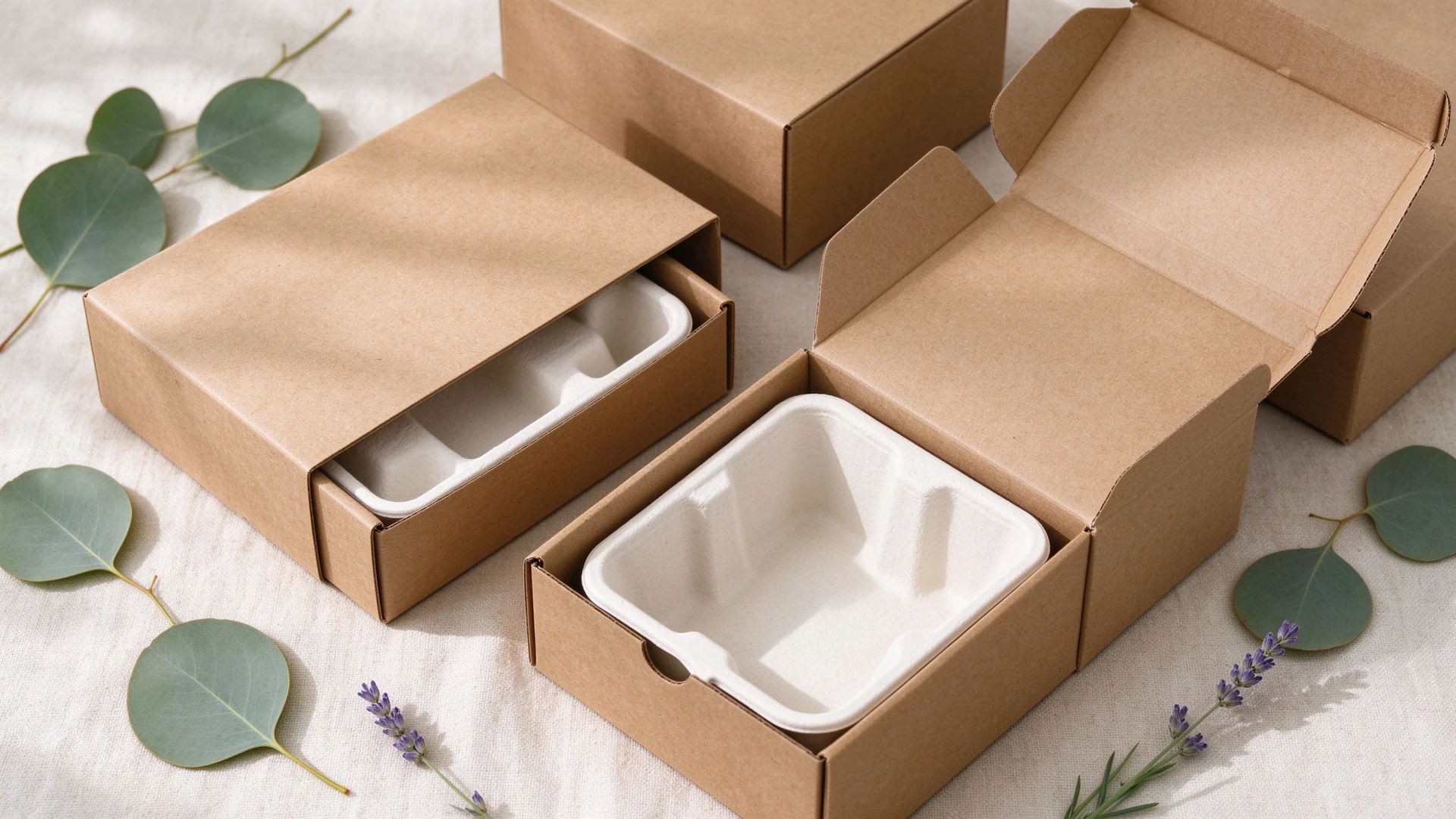
01Start with reduction and right-sizing
02Consider materials, coatings and recycling conditions together
03Verify protective performance before production
Introduction
Brand owners face a familiar dilemma: consumers want sustainable packaging, but nobody wants a box that arrives crushed, scuffed or falling apart. The good news is that designing an eco-friendly paper box no longer has to mean choosing between environmental goals and quality.
This article walks through five steps—from material selection, structural engineering and printing to certification and pre-launch testing—to create paper packaging that is kinder to the environment and budget while standing up to the journey.
Why quality remains the first priority in sustainable packaging
The main reason sustainable packaging fails is that it does not protect the product. A box damaged in transit can lead to returns, negative reviews and wasted material, potentially making it less environmentally favourable than the plastic packaging it replaced.
Protecting products can reduce damage, returns and repeat production. Sustainable design should meet functional needs first, then assess materials and recycling options.
Step 1: Choose suitable sustainable materials
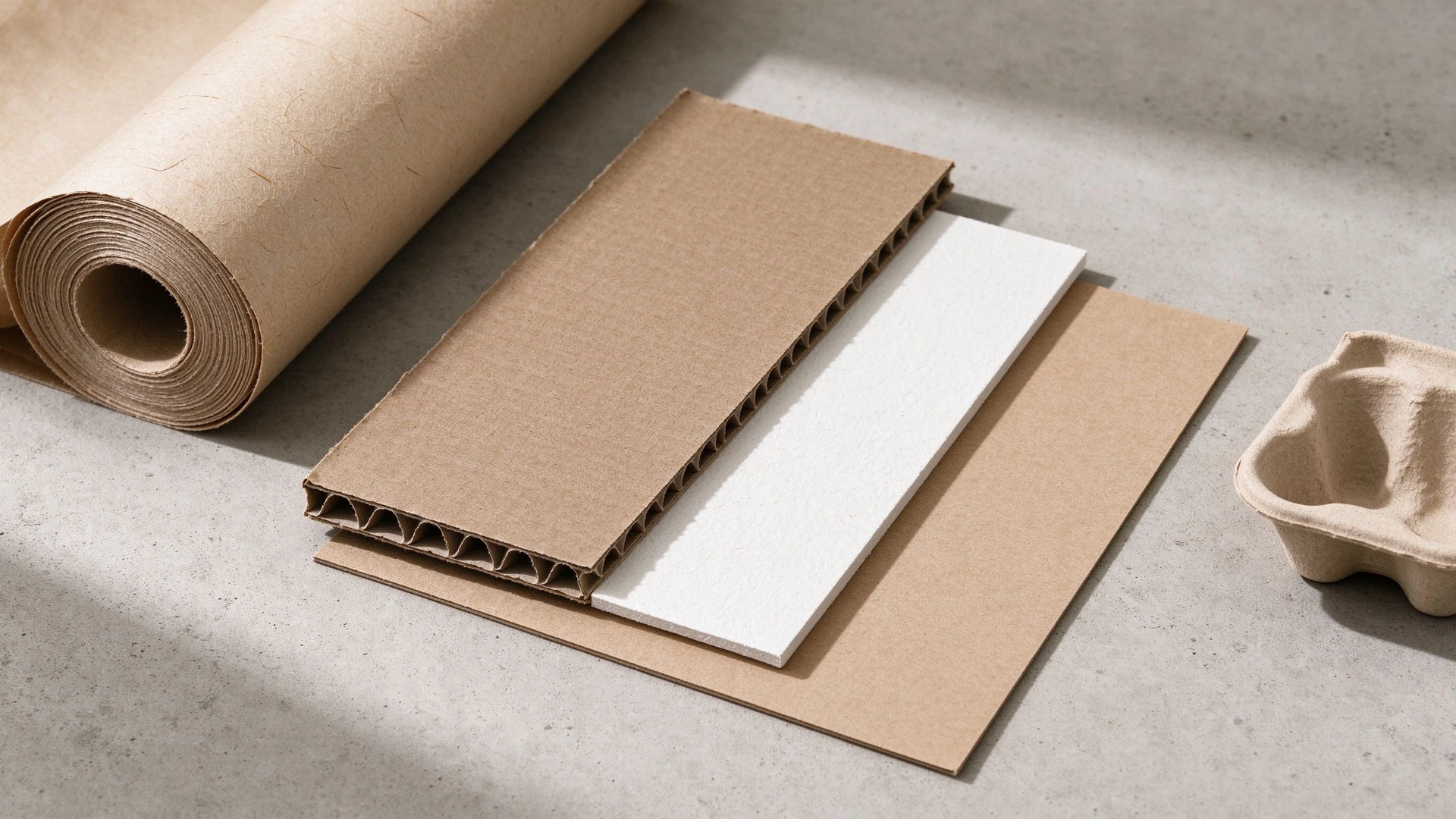
Not all materials marketed as “eco-friendly” are alike. Materials, box style, inserts and finishes together affect protection and end-of-life handling.
1. Recycled kraft paper and corrugated board
Recycled kraft paper is a mainstay of environmentally conscious packaging. It is renewable and biodegradable, and established recycling systems exist; actual recycling conditions still depend on the material combination and local facilities.
For parcel and e-commerce packaging that needs stacking strength, consider double- or triple-wall board rather than replacing every box with thinner single-wall board. Flute profiles (A, B, C, E and F) affect both cushioning and print detail:
| Flute profile | Typical applications | Strength characteristics |
|---|---|---|
| A flute | Fragile products and high cushioning needs | Strongest cushioning; less detailed print surface |
| B flute | Retail display and compact packaging | Good puncture and compression resistance |
| C flute | General-purpose shipping boxes | Balanced performance; most common |
| E flute | Retail packaging and cosmetics | Fine print surface; lighter cushioning |
| F flute | Premium folding cartons | Very smooth print surface; less cushioning |
2. FSC-certified virgin fibre (when strength is needed)
Fibres shorten with each recycling cycle; the number of usable cycles depends on fibre type and recycling and pulping conditions. Strong boxes therefore often blend recycled pulp with responsibly sourced virgin pulp. FSC-certified paper indicates that virgin fibre comes from responsibly managed forests. Verify certification type, certificate scope and mark use against actual supply; certified fibre sourcing and finished-product recyclability are separate questions.
One common approach is to specify at least 30–50% post-consumer recycled fibre (PCR) and combine it with FSC-certified virgin fibre. This retains strength from long fibres while providing a substantiated recycled-content story.
3. Moulded pulp cushioning inserts
Consider replacing plastic bubble wrap and foam. Moulded pulp inserts made from recycled newsprint or bamboo pulp can cushion electronics, cosmetics and glassware. Honeycomb paper structures can also produce surprising strength from recycled paper.
4. Avoid greenwashing materials
Be cautious of the following:
- Plastic-laminated paper—it may be harder to repulp; check the specific material combination.
- Plastics that only compost industrially—many regions lack suitable composting facilities.
- Paper, aluminium foil and plastic laminates—they may appear eco-friendly but can be difficult to recycle; verify the available processing route.
Step 2: Use structural engineering for strength
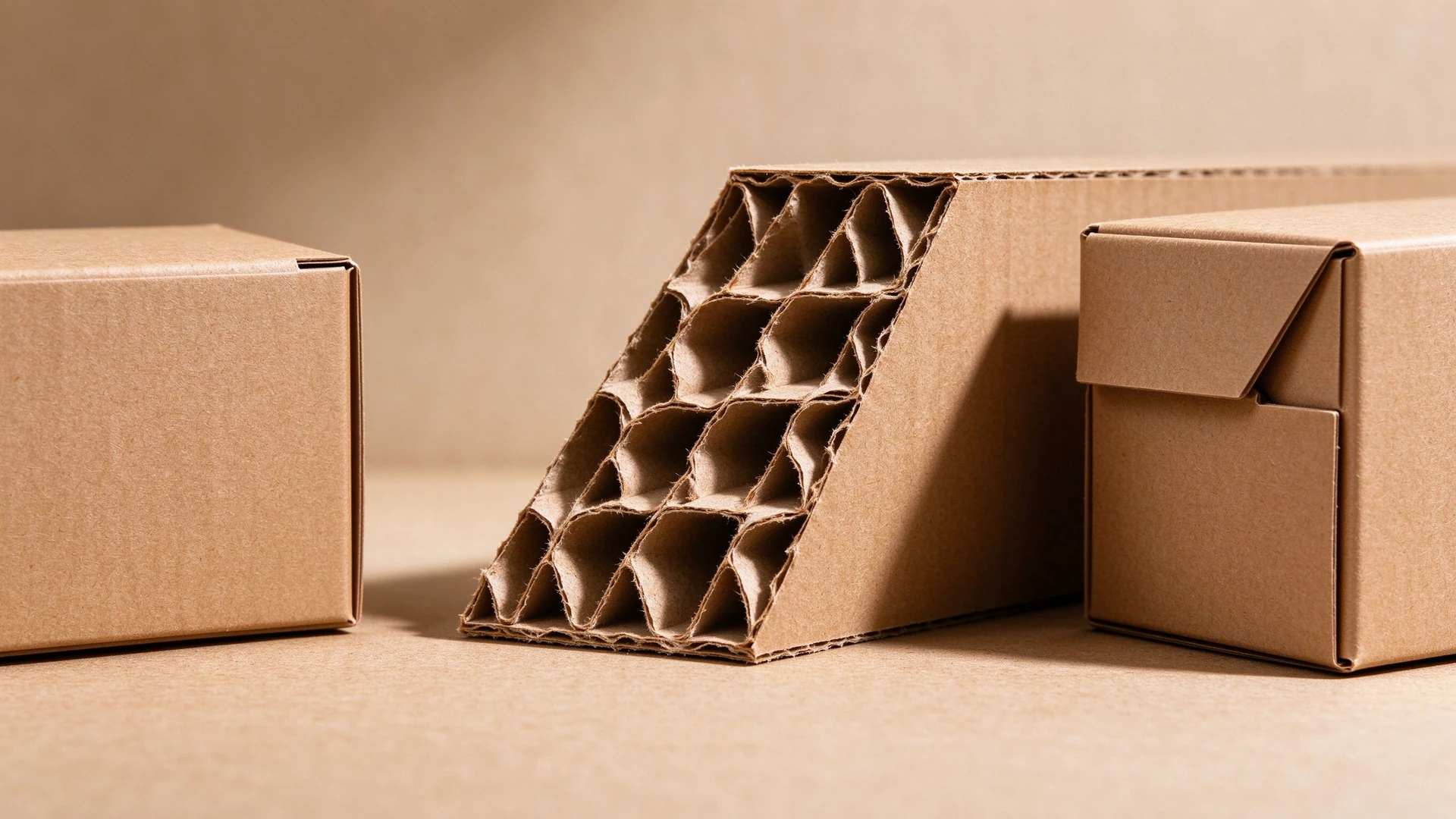
A good environmentally conscious box relies on smarter structural geometry, not simply thicker material.
Right-size each SKU
One effective sustainability improvement is right-sizing. An oversized box needs more void fill, ships more air and can increase transport emissions. Rather than relying on three standard sizes, design a suitable box for each SKU. After optimising space and inserts, compare material per box, shipping volume and actual protection.
Use structural geometry
Paper is strong in tension and weaker in compression, but folding changes its behaviour. Established structural approaches include:
- Lock-bottom or tuck-bottom structures for automated assembly and improved stacking performance
- Reverse-tuck folding cartons for retail shelves
- Honeycomb or corrugated structures integrated into box walls
- Self-locking tabs to replace plastic tape
- Dovetail or interlocking corners for rigid gift boxes
In suitable projects, paper structures and inserts can reduce plastic components while improving product retention and the unboxing experience.
Consider edge crush and burst testing
Specify board using actual performance measures rather than relying on the word “eco-friendly”:
- ECT (edge crush test): measures stacking capability. Specify the units and set a target for the box dimensions, load, stacking and environmental conditions.
- Mullen burst strength: measures resistance to bursting under pressure; puncture resistance requires a separate test.
- GSM (paper weight): 250–350 gsm can be a starting point for some lightweight retail folding cartons. For rigid gift boxes, confirm greyboard thickness, wrapping paper and structure separately rather than judging by gsm alone.
Ask your supplier for these figures with every material sample—quality can be measured, not just guessed.
Step 3: Printing and finishing without undermining recyclability
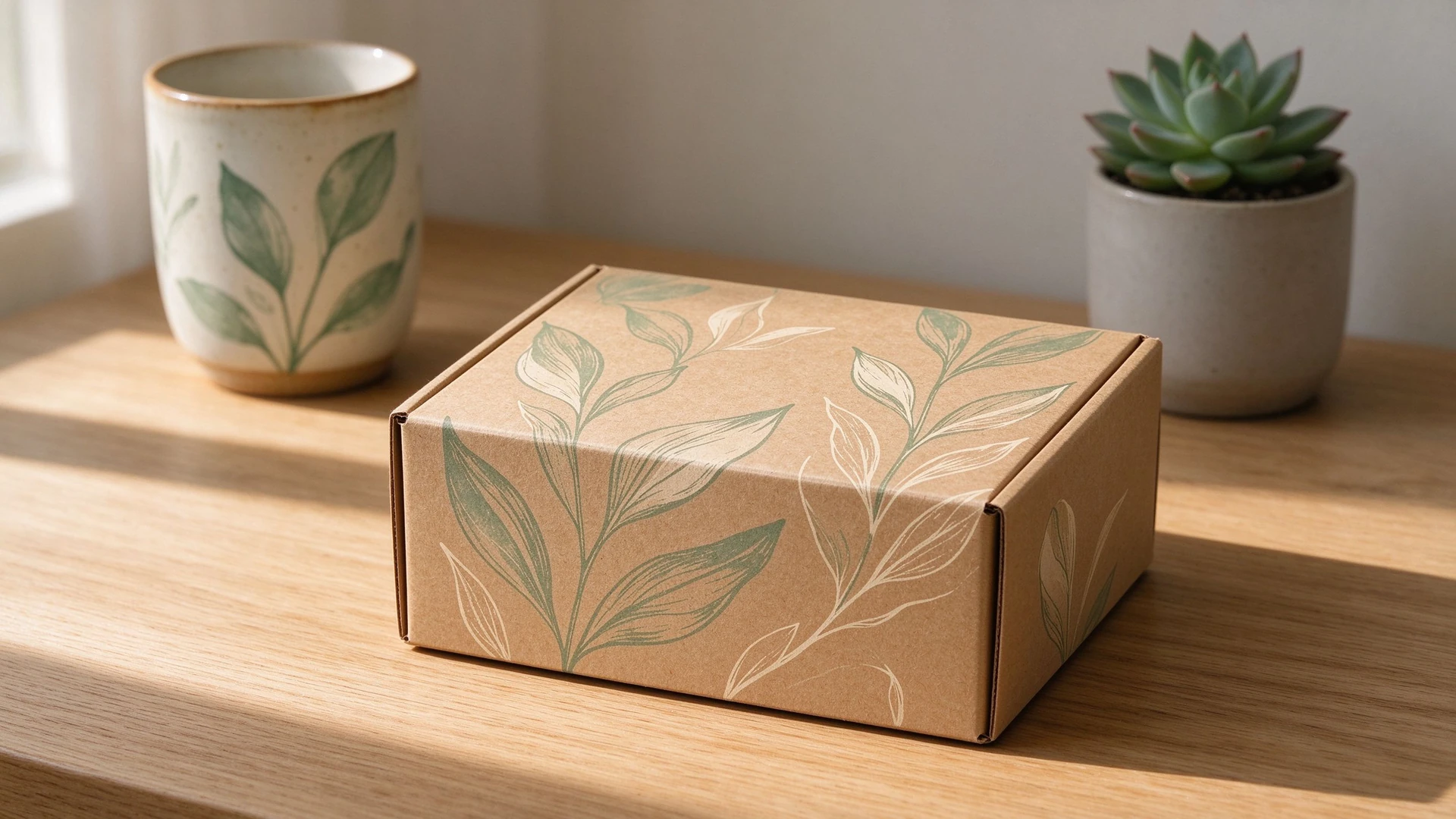
A common mistake is to design an attractive eco-friendly box and then laminate it with glossy plastic. This may affect repulping; check the material combination and local recycling conditions.
Choose water-based or soy-based inks
Compare water-based and vegetable-oil-based inks for the printing process. An ink's name alone does not guarantee recyclability; also confirm coverage, finishes, deinking and repulping conditions.
Consider coatings instead of plastic lamination
Plastic lamination changes the material combination. If recycling is a goal, assess the following options and verify suitability under local processing conditions:
- Water-based dispersion coating for a satin finish
- Aqueous coating for scratch resistance on shipping boxes
- Non-UV varnish for a subtle sheen
- Unlaminated natural kraft, increasingly popular with direct-to-consumer and handmade brands
Control ink coverage
Less ink can make recycling easier and reduce printing costs. Use white space and discuss digital versus offset printing with your printer: digital can suit short runs with less setup waste, while offset can suit longer runs with lower ink cost per box.
Step 4: Choose barrier solutions carefully
Paper can be sensitive to moisture, oil and oxygen. Bio-based barrier coatings can help, but their performance and recyclability depend on the coating and the finished package.
Moisture, oil and oxygen barrier performance varies widely. Choose a system for the product and storage and shipping conditions, and verify relevant test results. Consider:
- Food, cosmetics or oily products: oil resistance
- Cold chains, e-commerce or humid climates: moisture resistance
- Products requiring longer shelf life: oxygen resistance
Confirm that the selected coating is accepted by local paper mills. Many supposedly “eco-friendly” barriers are rejected during recycling because they contaminate fibres.
Step 5: Test thoroughly before production
This is an easy step to skip and a common source of failure. Run the following tests:
- Stacking test: simulate pallet loads for 24–72 hours
- Drop test: drop from an average shipping height, typically 75–115 cm
- Vibration test: simulate truck or air freight conditions
- Humidity test: expose to 80–90% relative humidity for 48 hours
- Repulpability test: confirm the box can return to pulp in a standard recycling process
Many packaging manufacturers offer these tests during sampling. Testing can cost less than a failure after launch.
Cost: assess materials, assembly and transport together
The cost of environmental improvements depends on paper, certified supply, processes, quantities and testing fees. Compare total cost, including material use, assembly efficiency, shipping volume and damage rate, rather than paper cost per box alone.
Five common mistakes
- Reducing board weight too far can lead to transit damage. Test the packed product before switching to a lighter grade.
- Laminating a “recycled” box with plastic: reassess the finished product's recyclability.
- Check local collection and processing options. Compostable packaging needs a suitable composting facility; a recyclable design also needs a local recycling route.
- Greenwashing: vague “eco-friendly” labels can attract regulatory scrutiny. Use third-party certification such as FSC, PEFC or SFI where applicable and state concrete figures, such as “70% recycled fibre”.
- Using one box for everything: generic sizes can increase freight and waste void-fill material.
Frequently asked questions
Are eco-friendly paper boxes as durable as plastic boxes?
They can be, if designed appropriately. Modern corrugated and moulded pulp structures can meet many shipping, retail and protective needs, but should be tested in the actual use case. Durability depends on board grade, flute and structural geometry, not simply whether the material is recycled.
Which paper box is the most environmentally friendly?
A box that does not need replacing—that protects the product on the first journey—is a good starting point. FSC-certified or recycled corrugated board designed for local kerbside recycling can be another starting point; overall environmental performance also depends on material use, transport, damage and actual recycling.
Can full-colour graphics be printed on recycled paper?
Yes. Modern recycled kraft and white-faced board can support CMYK and spot-colour printing. For finer results, consider E- or F-flute board or smooth coated recycled board (C1S/C2S).
Is FSC certification worth the cost?
For brands targeting Europe, North America or major retailers, it is. FSC is increasingly becoming a purchasing requirement and provides evidence of responsible fibre sourcing; use the mark only within the actual certificate scope and assess recyclability separately.
How can a box be made genuinely recyclable?
Use a single paper-based material, avoid plastic lamination, choose water-based inks, confirm that barrier coatings can be repulped, and clearly print recycling marks and fibre composition on the box.
FROM IDEA TO UNBOXING
Start sustainable improvements with your existing packaging
Bring your current packaging and use conditions so we can assess dimensions, materials and inserts together, balancing protection and material efficiency.
Discuss packaging requirements Explore LEMAY's sustainability practices
Transit packaging tests
ISTA 1A vs 2A: Which Packaging Test Actually Stops Your Products From Arriving Broken?
Read article ↗
Customisation process
How to order custom packaging: a complete 7-step guide
Read article ↗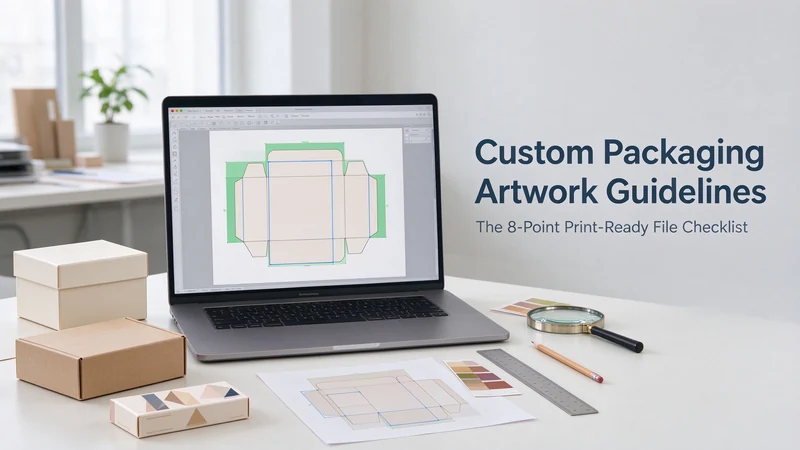
Artwork submission
Custom packaging artwork: 8 prepress checks
Read article ↗
Carton selection